Fingerprint Registration of Migrant Children
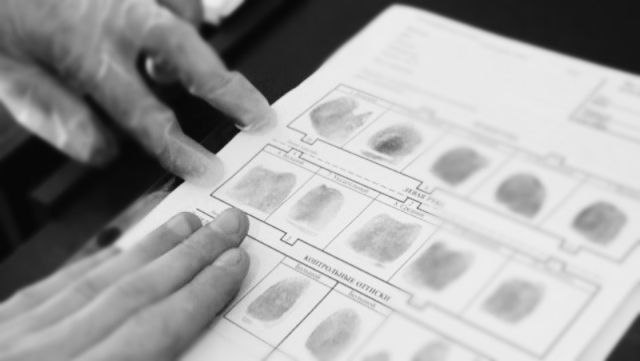
Fingerprint registration is the process of collecting biometric data that allows a person to be identified by their fingerprints. During the procedure, fingerprints are taken and a photograph is captured to be recorded in a special database of the Russian Ministry of Internal Affairs (MIA). This is required for security purposes and to ensure that children of foreign nationals are able to attend school or kindergarten in Russia. The procedure is simple and mandatory for children from the age of six.
It can be carried out in two ways:
- traditional (ink-based) — using special printing ink and a fingerprint card form;
- electronic (inkless) — using modern digital technologies.
When and for Whom It Is Required
Under the legislation of the Russian Federation, foreign nationals who arrive in Russia for purposes not related to employment and plan to stay in the country for more than 90 calendar days are required to undergo state fingerprint registration and photographing within 90 days from the date of entry.
Starting from April 1, 2025, migrant children over the age of six must also undergo fingerprinting before enrolling in an educational institution. Without this document, a child will not be admitted. Parents must come together with the child to a local MIA office or migration center.
Children under the age of six are exempt from the procedure.
Fingerprint registration and photographing are also not carried out for certain other categories of foreign nationals and stateless persons. These include:
- citizens of the Republic of Belarus;
- officials of international organizations who entered the Russian Federation in connection with the performance of their official duties, employees of their representative offices in Russia, and members of their families.
Foreign nationals who fail to undergo fingerprint registration and photographing within the установленный time frame may be subject to administrative liability.
How the Procedure Works
For minors, the procedure is carried out only in the presence of parents or an authorized representative with a notarized power of attorney.
The procedures are conducted by the Main Directorate for Migration Affairs of the MIA of Russia at the place of stay or by an authorized organization, including the passport and visa service of the MIA of Russia. Fingerprint registration at MIA offices is free of charge.
To complete the procedure, the following documents are required:
- the child’s birth certificate;
- the passport of one of the parents;
- the child’s passport (if available);
- notarized translations of documents;
- a migration card;
- a notice of arrival and other supporting documents.
A police officer scans the child’s fingerprints using a special device and takes a photograph. The entire process takes only a few minutes. After that, a green card is issued — an official document confirming registration.
The “Green Card” (officially called a “Fingerprint Registration Card”) is a document certifying that a foreign national has completed fingerprinting and photographing.
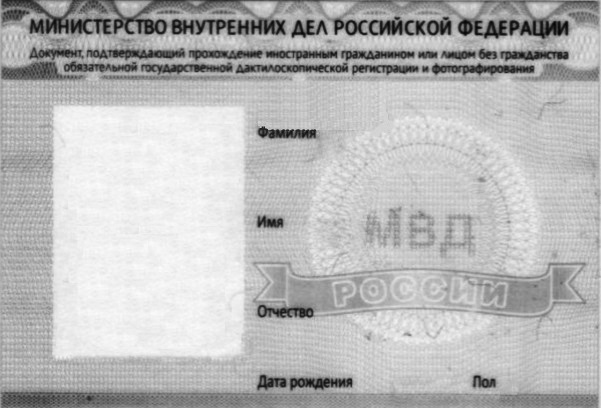
There are two formats available:
- A laminated card with a photo, date of birth, passport details, citizenship, and information about the issuing authority and date.
- A plastic card with a chip and images of fingerprints.
The green card is issued within five business days after biometric data collection, most often the next day.
The procedure only needs to be completed once, regardless of the number of entries into and exits from Russia.
However, the document confirming fingerprint registration and photographing has a validity period of 10 years. After this period, a new photograph must be taken and a new document issued.
In some situations, fingerprinting may need to be repeated, for example, if injuries affect the fingerprints of the hands or fingers.
Why Is This Done?
Fingerprinting is intended to address several objectives:
- Personal identification.
Fingerprints make it possible to accurately identify a child, which can be important in various life situations. - Search for missing persons.
If a child goes missing, fingerprint data can significantly speed up the search. - Identification in special cases.
If a child cannot provide personal information due to age or health conditions or does not have identity documents, fingerprinting helps resolve the issue. - Crime prevention and investigation assistance.
Biometric data can be useful for law enforcement agencies in preventing and solving crimes. - Monitoring the stay of foreign nationals in the country.
Fingerprint registration helps track the legality of the stay of children of foreign nationals in the Russian Federation.

Failure to complete the procedure on time may result in fines or refusal of school enrollment. The deadline is 30 days after arrival in Russia.
Conclusion
Fingerprint registration of children of foreign nationals is one of the tools of state control designed to ensure security and public order in the country.
Although this measure may provoke differing opinions, it is enshrined in law and aimed at addressing important social objectives.
Sources
- Federal Law No. 115-FZ of July 25, 2002 “On the Legal Status of Foreign Citizens in the Russian Federation”
- Order of the Ministry of Education of the Russian Federation No. 171 of March 4, 2025 “On Amendments to the Procedure for Admission to Educational Programs of Primary General, Basic General, and Secondary General Education, Approved by Order of the Ministry of Education of the Russian Federation No. 458 of September 2, 2020”
- Federal Law No. 128-FZ of July 25, 1998 “On State Fingerprint Registration in the Russian Federation”